Assisted Living vs. Home Care: What’s the Difference?
Compare assisted living and home care in key areas like cost, services offered, and benefits.
READ FULL ARTICLE
The following safety tips can help make your loved one’s home safer while minimizing the chances of a fall:
Falls are the leading cause of fatal and nonfatal injuries in people 65 years of age and older.1 With more fragile skin and decreased bone density, seniors often face physical challenges recovering from falls. The financial impact of a medically supported recovery can be significant as well.

Our free tool provides options, advice, and next steps based on your unique situation.
If your senior relative lives alone, it’s important to prepare for worst-case scenarios, such as fires, natural disasters, or medical emergencies. There are several things you can do to ensure your loved one’s home is safe and prepped for an emergency.
Security is another important consideration when improving the safety of a senior’s home. Many elderly people live in older homes that may require updates to remain safe and secure. Upgrading your loved one’s home security not only prevents accidents but also helps reduce stress for both you and your elderly relative.
People with dementia or Alzheimer’s disease are more likely to be injured from wandering, medication misuse, and other safety threats. If you’re caring for a loved one with dementia, it’s important to take additional security precautions.
By starting with simple modifications — such as grab bars, nonslip mats, and accessible light switches and door handles — you may be able to reduce the need for more significant and expensive renovations.
Linda Bohmbach, cofounder and vice president of sales and marketing at Home Healthsmith, a home safety modification company in Portsmouth, Rhode Island, notes that seniors deserve to feel independent in the houses they love and that any home can be made senior-friendly with the right modifications.
“When they look in the mirror, they don’t see someone who’s older,” she says. “They see someone about to go off to war, or a businessman, or a homemaker, so we make the modifications to help them live a full and independent life at home.”
Home safety and accessibility modifications can allow your loved one to age at home comfortably.
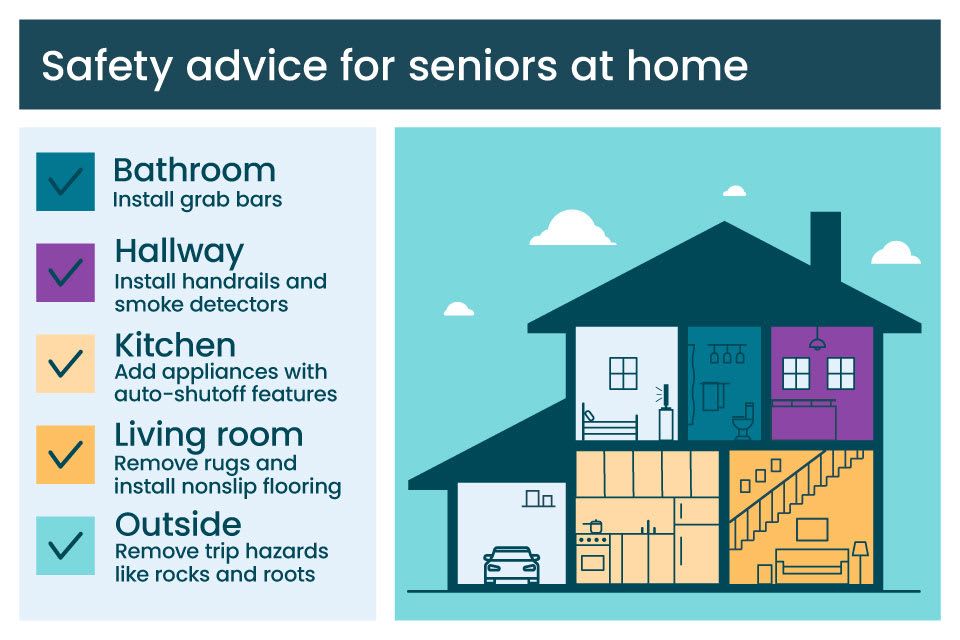
A home safety checklist can help you keep track of the safety tips covered above. Review this checklist periodically to ensure your senior loved one’s home remains safe and secure.

Our advisors help 300,000 families each year find the right senior care for their loved ones.
A home safety inspection is a comprehensive evaluation and elimination of potential hazards. A certified home safety specialist, such as an occupational therapist, can make recommendations to help keep your loved one safe in their home. Often, elderly people don’t realize their home is unsafe and don’t feel the need to make changes, says Bohmbach.
A thorough home safety inspection should include the following:
While accessibility devices and routine safety checks can help with home safety, assistance with health care and activities of daily living may become necessary as people age. In-home care can offer a range of benefits. In-home caregivers can provide companionship, conduct regular check-ins if family members don’t live nearby, run errands, and provide more supportive services as needed.
If your loved one needs extra support at home, A Place for Mom’s Senior Living Advisors can help you explore home care and senior living options (including independent living, assisted living, memory care, and nursing homes) that are designed to support safety and well-being.
Compare assisted living and home care in key areas like cost, services offered, and benefits.
READ FULL ARTICLE
Learn about the range of benefits involved, and discover a curated list of high-quality at-home and mobile devices.
READ FULL ARTICLECenters for Disease Control and Prevention. (2024, October 28). Older Adult Falls Data.
While traditional health insurance doesn’t typically cover home safety assessments, your loved one’s policy may cover one if it’s considered medically necessary by a doctor or an occupational therapist. Medicare Part B may also cover home safety assessments.
Some signs that your loved one may be declining and need additional help include:
A home safety assessment may cost between $50 and $200, depending on the location and size of the home.
A safe bed height for elderly people is generally between 18 inches and 23 inches, around the height of a chair. However, an occupational or physical therapist can provide more personalized recommendations to accommodate abilities and ensure comfort and safety.
Some of the most common home hazards for elderly people include: